What Is the Lead Time from Lab-Scale Synthesis to Mass Production at a Peptide Factory?
In peptide-based pharmaceutical R&D, cosmetic ingredient manufacturing, and biotechnology applications, execution speed and supply chain transparency are critical to project success. When partner companies transition a peptide sequence from early laboratory development to commercial-scale manufacturing, one of the primary questions procurement and technical teams ask is: What is the realistic lead time from lab-scale synthesis to mass production?
At a modern contract development and manufacturing organization (CDMO) or professional peptide factory, the complete scale-up process typically ranges between 4 to 16 weeks. The exact timeframe depends heavily on sequence length, structural complexity, purification targets, and batch volume requirements.
Standard Scale-Up Phase Breakdown
Phase 1: R&D & Bench-Scale Synthesis (1 – 3 Weeks)
Sequence evaluation, synthetic route selection (SPPS/LPPS), crude synthesis, and initial analytical method establishment (HPLC/MS).
Phase 2: Pilot Scaling & Process Optimization (2 – 4 Weeks)
Solvent system optimization, purification yield testing, impurity profiling, and batch stability validation under scaled conditions.
Phase 3: Full-Scale Production & QC Release (2 – 5 Weeks)
Commercial batch manufacturing, preparative HPLC purification, multi-kilogram lyophilization, COA generation, and final inspection prior to dispatch.
Key Factors Influencing Production Lead Time
Sequence Length and Complexity: Standard linear peptides under 30 amino acids require shorter synthesis cycles. Complex modifications—such as disulfide bridging, cyclization, N-terminal/C-terminal tagging, or dye labeling—add precise reaction steps and analytical verification time.
Purity and Quality Specifications: High-purity requirements (e.g., ≥98% or ≥99%) demand meticulous preparative HPLC fraction collection and stringent purity testing compared to standard technical-grade products.
Raw Material Procurement: Standard Fmoc-protected amino acids and resins are usually kept in stock. Custom protected amino acids or rare non-natural building blocks may require extended procurement lead times.
Regulatory and Analytical Documentation: Comprehensive quality control documentation—such as HPLC reports, Mass Spectrometry (MS) data, Amino Acid Analysis (AAA), and endotoxin testing—ensures strict batch-to-batch consistency and regulatory compliance prior to global shipping.
Partnering with a Direct Peptide Manufacturer:
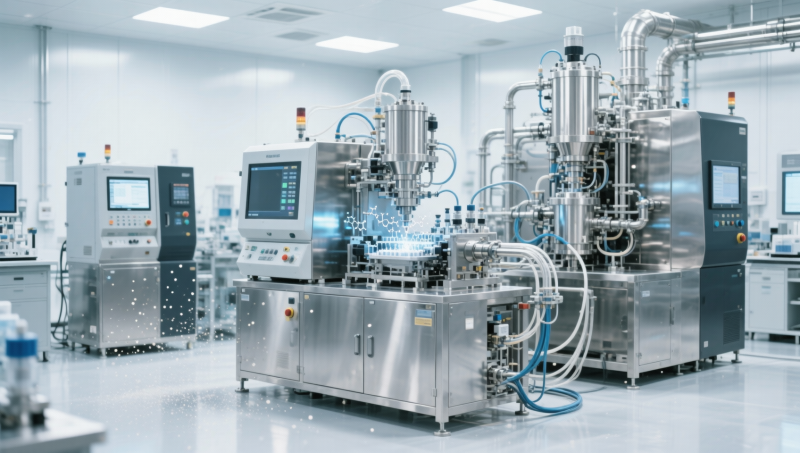
Working directly with an established peptide factory equipped with modern automated synthesizers, large-bore preparative HPLC systems, and multi-kilogram lyophilizers minimizes technical bottlenecks, ensuring predictable lead times and reliable global shipping.