
How Does a Peptide Factory Guarantee Batch-to-Batch Consistency?
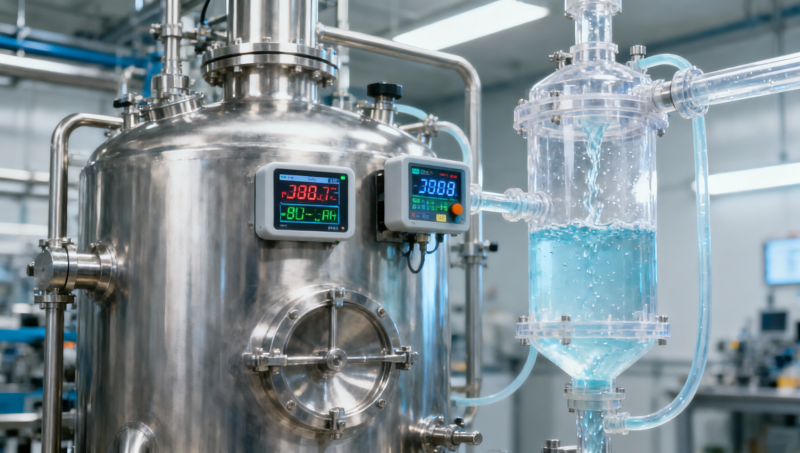
In the sourcing of bioactive peptides and functional raw materials, batch-to-batch consistency stands as a critical benchmark when evaluating a peptide manufacturer's technical capability. Because peptide production involves delicate enzymatic hydrolysis, ultrafiltration, and drying techniques, ensuring that every manufactured batch maintains uniform purity, molecular weight distribution, and organoleptic properties requires rigorous system integration.
A sophisticated peptide factory typically relies on four core operational pillars to ensure continuous batch stability across commercial production runs:
1. Strict Raw Material Control & Standardized Pretreatment
Batch consistency begins at the source. Standardized factories establish long-term vendor qualification protocols to evaluate incoming protein substrates prior to processing. By implementing standardized cleaning, solubilization, and pretreatment procedures, manufacturers minimize natural variances caused by seasonal or regional raw material origins, laying a uniform foundation for downstream processing.
2. Automated & Standardized Process Parameter Controls
Manual operation during enzymatic digestion and purification often introduces human variability. Professional peptide factories utilize automated Process Control Systems (PCS) to monitor and control Critical Process Parameters (CPPs)—such as reaction temperature, pH levels, enzyme-to-substrate ratios, stirring speeds, and concentration pressures. Automating these steps ensures that the precise reaction conditions are identically replicated from batch to batch.
3. In-Process Quality Control (IPQC) & Intermediate Testing
Quality control specialists conduct real-time sampling and intermediate testing at designated Critical Control Points (CCPs) throughout the production pipeline. Before transitioning from enzymatic cleavage to membrane filtration or spray-drying, IPQC analysts verify that intermediate targets are met. Detecting and adjusting minor process deviations in real time prevents quality variance from cascading into the finished product.
4. Standard Reference Sample Comparison & Batch Release
Before any production batch receives final release authorization, the factory’s Quality Control (QC) laboratory performs comprehensive analytical testing to generate a Certificate of Analysis (COA). Furthermore, key parameters—such as HPLC purity profiles, molecular weight distribution curves, and solubility metrics—are systematically benchmarked against an established Standard Reference Sample. The finished goods are authorized for shipment only when all metrics fall precisely within predefined tolerance specifications.
Summary
Consistent batch quality is never an accident; it is the direct outcome of disciplined quality management and engineering precision. Partnering with a peptide factory equipped with automated process controls and strict quality assurance systems provides brand owners with the predictability required to safeguard end-product performance and maintain brand trust in the global market.